Organic meat and what the label guarantees about animal welfare
What an organic label does and doesn't promise for beef, lamb, pork and poultry, and where Icelandic lamb sits on the welfare spectrum already, with or without the certification.
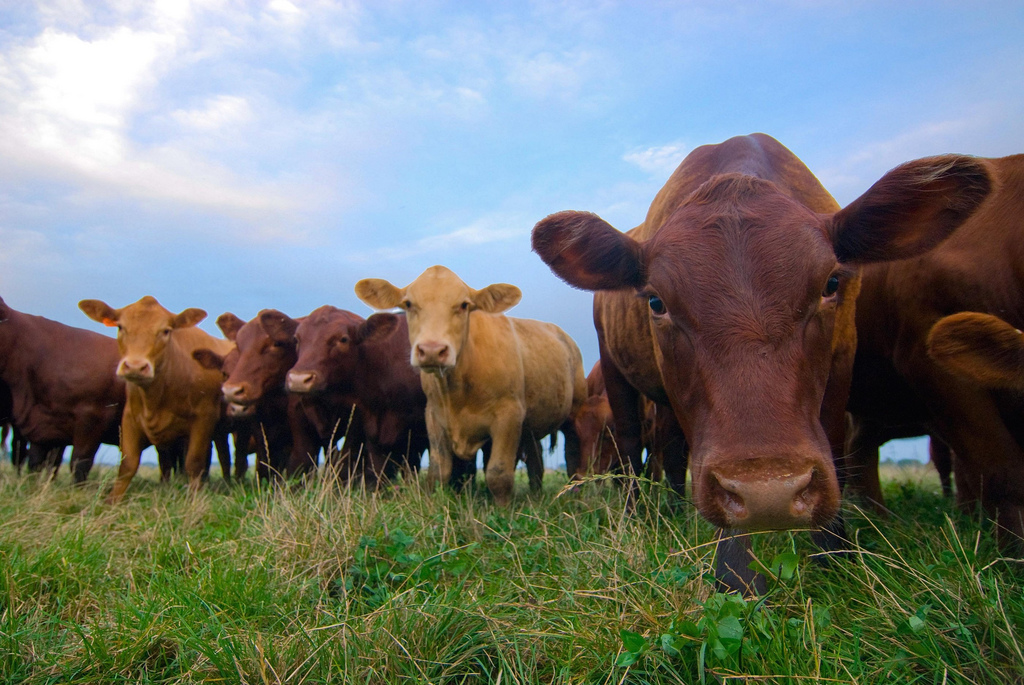
Most people buy organic meat because they want to feel better about the animal. That instinct is reasonable, and it's mostly rewarded, but the details vary sharply by species, and in at least one case (Icelandic lamb) the organic label is not the biggest welfare story on the shelf.
This is a walk through what organic actually requires, and what it does not, for the four meats you're most likely to find on a certified label.
The rules that cover every species
EU Regulation 2018/848, the rulebook that applies in Iceland through the EEA, sets a few baseline requirements that apply to all organic livestock:
- 100% organic feed. Nothing the animal eats can come from a conventional field.
- No routine antibiotics. Sick animals can and must be treated, but prophylactic dosing of a whole herd is forbidden.
- No growth promoters or hormones. These are already banned in the EU for all livestock, organic or not.
- No GMO feed.
- Outdoor access whenever weather and ground allow.
- Space requirements, indoors and out.
- Ban on tethering and on fully slatted floors. Animals must have a bedded rest area.
- Transport and slaughter have to follow EU animal welfare law. Organic rules add a general requirement to "minimize stress," but they don't create a separate organic slaughterhouse standard.
That last point is worth holding onto. Organic certification covers the life of the animal very tightly and the death of the animal very lightly. The slaughterhouse an organic animal goes to is the same kind of slaughterhouse a conventional animal goes to.
Cattle (beef)
Beef cattle must graze when conditions allow, must be fed at least 60% roughage in their daily dry matter, and cannot be housed in tie-stalls except in a narrow derogation for small herds. Feedlot finishing is effectively incompatible with organic rules, an organic beef animal finishes its life on forage and organic concentrates, not on a corn-heavy ration in a confinement lot.
Organic beef herds in Europe tend to be smaller, grazing-based, and slower-growing than conventional ones. That slow growth is part of what the premium pays for.
Sheep (lamb and mutton)
Organic sheep rules are structurally similar to cattle rules: pasture-based, organic feed, no routine antibiotics, no tail-docking without veterinary justification.
Here is where Iceland changes the picture. Conventional Icelandic lamb is already one of the most extensively raised meats in Europe. Ewes and lambs spend the summer free on the highlands, grazing wild herbs and grasses with almost no human intervention, and come down to winter housing only when the snow arrives. The carbon, feed, welfare, and input profile is already close to what organic certification describes. The gap between "Icelandic lamb" and "Icelandic organic lamb" is therefore much smaller than the gap between "Danish pork" and "Danish organic pork."
That does not make certification worthless, it adds the paperwork, the audit trail, and the guarantee of organic winter feed. But it means the welfare story of Icelandic lamb is mostly not an organic story. It's a geography story that happens to be compatible with organic rules.
Pigs
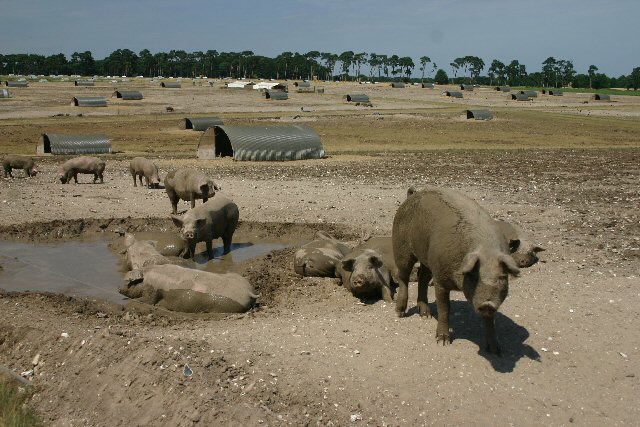
Organic pig rules are the biggest welfare departure from conventional farming, because the conventional baseline for pigs is so much tighter than for cattle or sheep.
Organic pigs get:
- Outdoor access whenever conditions allow. Many organic pig farms use outdoor paddocks with huts year-round; others combine outdoor runs with bedded indoor pens.
- A bedded lying area, straw, not bare concrete or slats. Fully slatted floors are prohibited.
- No nose-ringing to stop rooting, which is a common conventional practice. Rooting is allowed.
- No routine tail docking or teeth clipping. These are allowed only as a documented last resort.
- More space. The stocking density is roughly half the conventional maximum indoors, with additional outdoor space on top.
- Later weaning, piglets stay with the sow for at least 40 days, versus 21–28 days in conventional systems.
If you care about pig welfare specifically, the organic label is doing a lot of work. This is probably the species where the premium is most clearly earned on the welfare side alone.
Poultry (chicken and turkey)
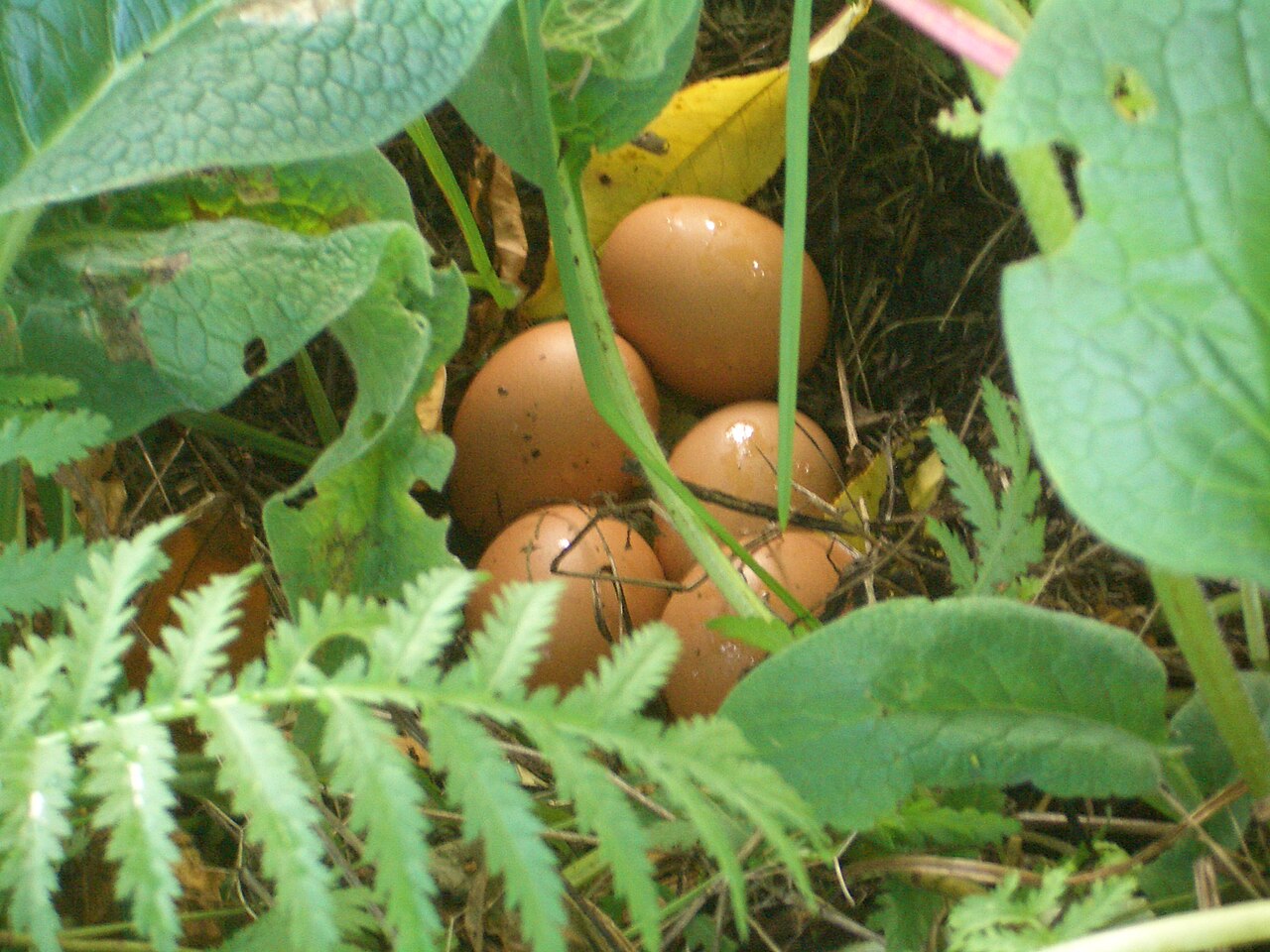
Organic poultry has its own detailed ruleset, tightened by Implementing Regulation 2020/464. The headline numbers:
- Indoor stocking density is capped at 6 birds per square meter for laying hens and limited similarly for broilers.
- Outdoor access is mandatory for at least one third of the bird's life, with open-air areas mainly covered in vegetation and drinking troughs accessible.
- Cages are entirely banned.
- Slow-growing breeds are strongly preferred. A broiler chicken from a fast-growing conventional strain must be at least 81 days old at slaughter, roughly double the conventional age, which forces farmers to use breeds that are physiologically suited to living longer lives.
- Outdoor radius for laying hens cannot exceed 150 meters from the nearest pop-hole of the poultry house, so the flock actually uses the outdoor area rather than just having it exist on paper.
The 81-day rule is particularly important. Fast-growing broiler strains are bred for seven weeks of life, not twelve, extending their life to 81 days on those strains causes leg problems and heart failure. So organic producers in practice switch to slower-growing strains that are healthier at that age. The rule is a breed rule in disguise.
What organic meat does NOT guarantee
Worth saying plainly, because the marketing muddies this:
- It does not guarantee a less painful death. The slaughter process is the same regulated process conventional meat goes through.
- It does not guarantee a short transport. Long live-transport to slaughterhouses is allowed on organic animals under the same EU transport rules as conventional ones.
- It does not guarantee the animal was happy. It guarantees space, feed, and access, not emotional state, which we can't directly measure.
- It does not automatically guarantee small-farm production. Organic herds and flocks can be large; the rules are about conditions, not scale.
- It does not guarantee local. Organic meat in an Icelandic supermarket is often imported organic from continental Europe.
What to look for
If you are buying meat in Iceland and want the strongest welfare story you can currently get:
- Icelandic lamb, organic or not, is already pasture-raised on a scale that most European organic meat cannot match.
- Organic Icelandic dairy-herd beef is a stricter buy than conventional, with the trade-off of smaller availability.
- Organic pork, where you can find it, is the biggest welfare upgrade over conventional of any species.
- Organic chicken means a slow-growing breed and genuine outdoor access, which is a meaningful change from standard supermarket chicken.
As always, look for the EU organic leaf or a TÚN Vottun mark on the packaging. Without a certifier, nothing on the label is a promise.
Keep reading
More from our library on products.
How organic milk, cheese, and butter are actually made
A walk from the pasture to the carton, what organic certification actually requires of a dairy farm, and how the Icelandic version differs from the continental one.
ReadOrganic grains and bread, from field to loaf
How organic grain farming actually works, why rotation is the whole game, and what "organic bread" really guarantees once the grain leaves the field.
ReadGrowing organic vegetables and root crops
What it actually takes to grow organic carrots, potatoes, onions, cabbage, and leafy greens, and why Iceland's short seasons and geothermal greenhouses change the equation.
Read