
Is organic healthier? What the evidence says
This is where marketing and science most often part ways. Here's an honest look at pesticide residues, nutrition, antibiotic resistance, biodiversity, and the climate question.
The honest answer is: it depends what you mean by healthier, and in several cases the answer is "probably not in any big way." If you want Organica to be useful rather than loud, the fastest way to stand out is to actually tell you this instead of pretending otherwise.
Here's a careful look at what is and isn't supported.
Pesticide residues
Well supported. Multiple studies have shown that people who eat organic food have measurably lower pesticide residues in their urine, and organic produce has fewer detectable residues at retail than conventional produce. That's the clean part of the story.
The messier part: conventional produce is regulated to stay below legal safety limits, and at those limits there is no proven acute harm for normal consumers. Organic reduces exposure, which is a real thing, but it does not prove that conventional is unsafe at the levels most of us actually eat.
If a member of a family is pregnant, very small, or immunocompromised, the argument for reducing pesticide exposure is stronger. For the average adult, the evidence of direct health benefit is harder to pin down.
Nutritional content
Not well supported. This is the most common marketing claim, and it's the weakest. The most widely cited large review, the 2012 Stanford meta-analysis, found no meaningful differences in macronutrients between organic and conventional produce. Some later studies suggest slightly higher antioxidant levels and different fatty acid profiles in organic dairy and meat, but the effects are small and inconsistent from study to study.
What actually matters for nutrition, far more than the organic label, is how fresh the food is, how ripe it was when it was picked, how it was stored, and what variety it is. A conventional apple picked this morning will beat a month-old organic apple every time.
If anybody tells you "organic is more nutritious," they are overclaiming.
Antibiotic resistance
Well supported, and this is one of the strongest arguments for organic. Conventional livestock operations frequently use routine low-dose antibiotics in feed, which accelerates the development of antibiotic-resistant bacteria in the food chain. This is a genuine public health problem, resistance to the antibiotics that doctors rely on to treat human infections.
Organic livestock rules ban routine antibiotic use. If an organic animal needs antibiotics to survive, it gets them, but it loses its organic status and is sold as conventional. That rule substantially reduces the role organic livestock play in the resistance problem. This is probably the clearest public health case for organic meat and dairy, and it gets talked about far less than vague "healthier" claims.
Biodiversity and soil
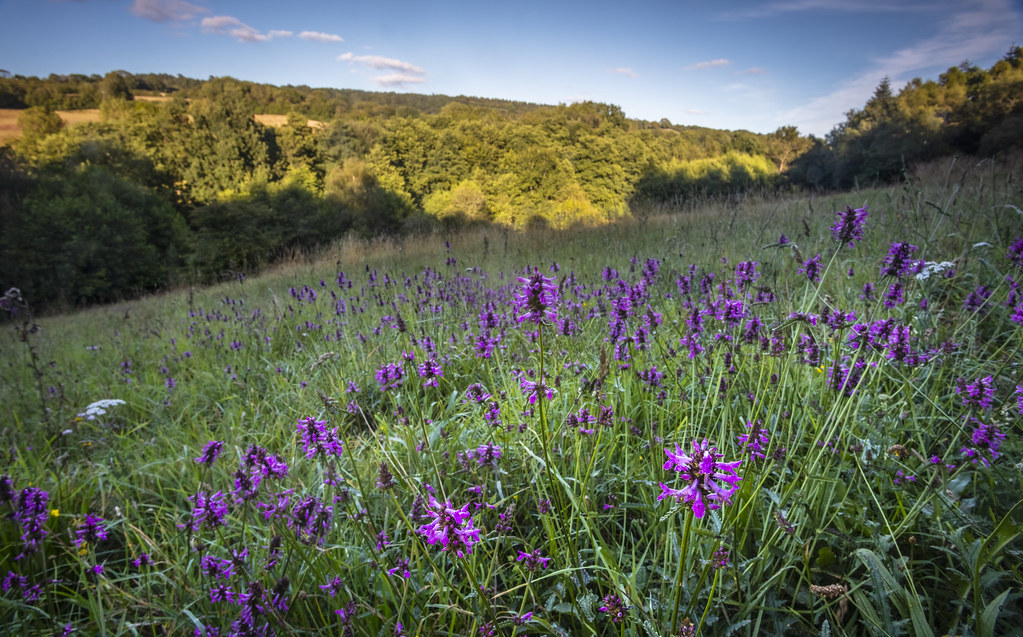
Well supported. Organic farms consistently host more biodiversity per hectare, more insects, birds, soil microbes, than conventional farms. The 2015 Nature review found an average of around 30% more species on organic farms. Organic soils also tend to accumulate carbon over time, at least under good management, which is a real climate benefit per hectare.

Water quality
Well supported. Without synthetic fertilizer applications, organic farms produce far less nitrogen runoff into rivers and groundwater. Synthetic fertilizer runoff is one of the main drivers of the dead zones in places like the Baltic Sea and the Gulf of Mexico, so "less of this" is a real environmental win.
Climate
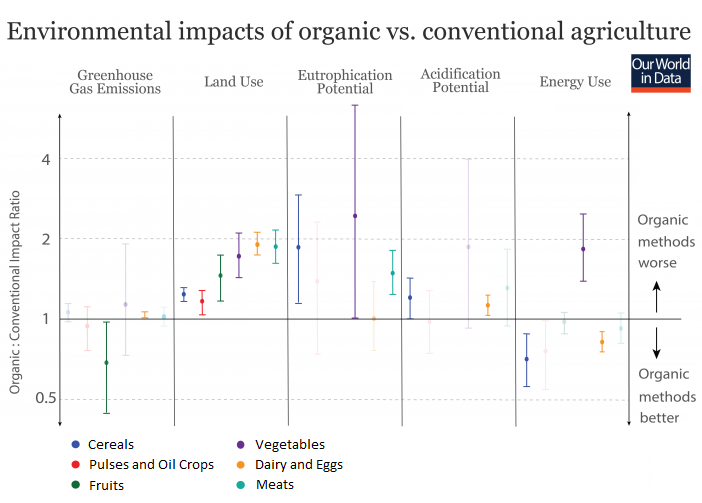
Contested. This is the murkiest area. On one hand, organic skips the energy cost of manufacturing synthetic nitrogen fertilizer, which is significant. On the other hand, lower organic yields mean more land is needed to produce the same calories, and land-use change has climate costs too.
Life-cycle assessments go both ways depending on assumptions. Honest answer: organic is sometimes better for the climate and sometimes worse, and it depends heavily on the specific crop, the farm, and how land use is counted.
Anyone selling you a confident "organic solves climate change" answer is selling you confidence, not evidence.
So, healthier?
If you stack the honest answers:
- Lower pesticide exposure: yes, clearly.
- Less contribution to antibiotic resistance: yes, clearly.
- More biodiversity and better soil per hectare: yes, clearly.
- Nutritionally richer: no, not meaningfully.
- A personal health breakthrough: no, probably not.
- Better for the climate: sometimes.
That is a more modest story than a marketing department wants to tell. It is also, in our view, a more durable one. It's a set of reasons that don't require you to believe anything ridiculous, and that will still be standing five years from now.
Keep reading
More from our library on evidence.
The Complete Guide to Organic Certification Logos
USDA, EU leaf, Demeter, JAS, Tun, what every organic logo means, who issues them, and how to verify they're legitimate.
ReadWhat 'organic' actually means
The word 'organic' on a label isn't marketing, it's a legal standard. Here's what certifiers like the USDA, the EU, and Iceland's TÚN actually require before a product can use it.
ReadGOTS vs. OEKO-TEX: What Textile Labels Really Mean
Two logos everyone confuses. One certifies organic. The other certifies the absence of harmful substances. The difference matters.
Read