Every organic seal, explained.
42 certifications across food, textiles, cosmetics, and household goods. Filter by region, trust tier, or product scope. Tap any seal to see what it guarantees, what it doesn’t, and how strict the inspection actually is.
See a logo on a product and want to know what it means? Tap the camera button on Tinni (bottom-right) and switch to the Logos tab. Tinni will identify any seals she can see and link straight back to this database. (VIP feature.)
Australian Certified Organic
Australia's largest organic certifier, accredited under the Australian National Standard for Organic and Bio-Dynamic Produce. The bud-and-leaf logo is the most-seen organic mark in Australian supermarkets.
Bio-Siegel (Germany)
Germany's national organic mark, owned by the Federal Ministry of Food and Agriculture. Sits alongside the EU Leaf on most German organic packaging since 2001. Same standard as the EU Leaf — Bio-Siegel is the brand consumers recognise.
BioGro New Zealand
New Zealand's largest organic certifier. Recognised by the EU, US, and Japan under their respective import-equivalence regimes.
Canada Organic Biologique
The federal Canadian organic standard, mandatory on any agricultural product sold across provincial borders or imported as 'organic'.
China Organic (COFCC)
China's national organic certification under the Certification and Accreditation Administration. Mandatory on any product sold as '有机' (organic) in mainland China.
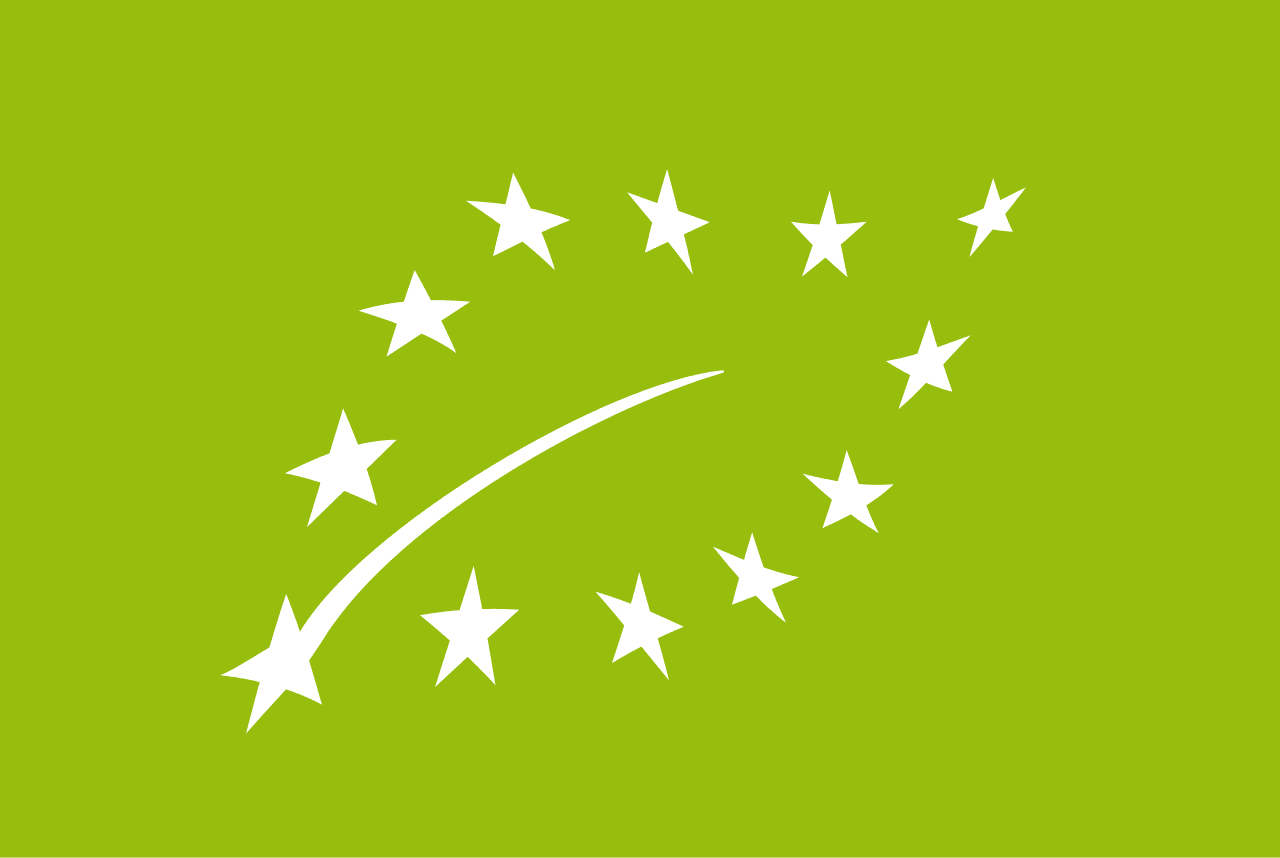
EU Organic (Euro-Leaf)
The mandatory mark for any pre-packaged organic food sold in the EU. The 'Euro-Leaf' is a stylised leaf made of twelve white stars on a green background.
India Organic (NPOP)
India's national organic mark under the National Programme for Organic Production. Administered by APEDA; required on any food exported as organic and increasingly on domestic packaging.
JAS Organic
Japan's national organic standard under the Japanese Agricultural Standard system. The mark must appear on any food sold as 'organic' (有機 or オーガニック) in Japan.
Korea Organic
South Korea's national organic mark under MAFRA (Ministry of Agriculture, Food and Rural Affairs). Required on any food sold as 유기농 in Korea.
Ø-mærket (Denmark)
Denmark's national organic mark, owned by the Danish Veterinary and Food Administration. The red Ø is one of the most-trusted food labels in the world — recognised by ~98% of Danish consumers.
Orgánico Argentina
Argentina's national organic mark under SENASA (National Food Safety and Quality Service). Implemented as a label in December 2012 under Law 25.127 (1999).
Orgánico SAGARPA / SENASICA (Mexico)
Mexico's national organic mark, administered by SENASICA under the Ley de Productos Orgánicos (LPO).
SisOrg — Produto Orgânico Brasil
Brazil's national organic mark under the Sistema Brasileiro de Avaliação da Conformidade Orgânica, administered by MAPA. Required on any food sold as 'orgânico' in Brazil.
Tún (Iceland)
Vottunarstofan Tún is Iceland's only accredited organic certifier. Accredited by MAST (Matvælastofnun) under the EU 2018/848-equivalent Icelandic standard, so a Tún-certified product is also recognised as EU-organic.
USDA Organic
The US Department of Agriculture's national organic standard. The green-and-white seal is the legal mark for any food sold as 'organic' in the United States.
AB (Agriculture Biologique)
France's national organic mark, owned by the Ministry of Agriculture. Sits alongside the EU Leaf on virtually all French organic packaging.
Bio Suisse 'Knospe' (Bud)
The Swiss organic farmers' federation mark. The Knospe (Bud) is the dominant organic mark in Swiss supermarkets and operates to standards stricter than the Swiss federal organic ordinance.
Bioland
Germany's largest organic farmers' association. Bioland-certified farms operate to a stricter private standard than the EU baseline.
COSMOS-Organic / Natural
The leading certification for organic cosmetics in Europe. Two grades: COSMOS Organic (≥95% organic agricultural ingredients) and COSMOS Natural (no organic minimum, but the same restricted-ingredient list).
Debio Ø (Norway)
Norway's only accredited organic certifier. The Ø-merket is required on any food sold as 'økologisk' in Norway. Operates to EU 2018/848 equivalence plus Norwegian add-ons.
Demeter International
The certification mark for biodynamic agriculture. Stricter than any government organic standard: it covers the entire farm as a closed ecosystem, follows a planting calendar tied to lunar/solar cycles, and bans many practices the baseline organic rules permit.
Ecocert
France-based independent certifier operating in 130+ countries. One of the world's largest organic + cosmetics + textile certifiers. The 'Ecocert' wordmark on a package usually means Ecocert was the accredited body that ran the inspection against the national/EU standard.

Fair for Life
Combined organic + fair-trade + social-responsibility certification. Issued by Ecocert (originally developed by IMOswiss). Stricter than baseline Fairtrade on labour conditions; often paired with an organic mark on the same product.
Global Organic Textile Standard
The strictest, most widely-recognised standard for organic textiles. Covers the full supply chain from organic fibre to finished garment, with environmental AND social criteria.
IBD Orgânico (Brazil)
South America's largest organic certifier. IBD certifies under Brazilian, USDA NOP, EU, and JAS standards — a single-stop certifier widely used across Latin America.
IFOAM — Organics International
The international umbrella body for the organic movement. Not a product label — IFOAM accredits other certifiers worldwide via the IFOAM Family of Standards. If a cert is 'IFOAM-accredited' it has been benchmarked to a globally consistent baseline.
Kilimohai Organic Mark (East Africa)
The East African regional organic mark, under the East Africa Organic Products Standard (EAOPS). Used across Kenya, Tanzania, Uganda, Rwanda, and Burundi. Administered through Participatory Guarantee Systems coordinated by KOAN (Kenya Organic Agriculture Network).
KRAV (Sweden)
Sweden's leading organic mark. Built on the EU 2018/848 baseline plus stricter Swedish add-ons covering animal welfare, climate impact, and social conditions.

Luomu (Finland)
Finland's national organic 'Sun Mark' (Aurinkomerkki). Operated by the Finnish Food Authority. In practice most Finnish organic packaging carries both Luomu and the EU Leaf — they certify to the same baseline.
NASAA Certified Organic (Australia)
National Association for Sustainable Agriculture, Australia. One of seven Australian Department of Agriculture-approved certifiers. IFOAM-accredited; certifies organic and biodynamic produce.
NATRUE
An EU-based natural-and-organic cosmetics certification. Three grades: Natural, Natural with Organic portion, and Organic.
Naturland
A German farmers' association whose private organic standard is stricter than the EU baseline. Covers food, aquaculture, textiles, and cosmetics. Recognised globally.
OEKO-TEX Organic Cotton
Launched April 2023 by the OEKO-TEX Association. A separate certificate from Standard 100 that combines the Standard 100 chemical-residue test with verified organic-cotton supply chain — addressing the long-standing confusion that Standard 100 alone is NOT an organic mark.

Regenerative Organic Certified (ROC)
A 'beyond organic' standard developed by the Regenerative Organic Alliance (Patagonia, Rodale Institute, Dr. Bronner's, others). Built on top of USDA Organic; adds soil health, animal welfare, and social fairness pillars.
Soil Association Organic
The UK's largest organic certifier. Standards are stricter than the UK government's baseline (which still mirrors EU 2018/848 post-Brexit). Recognised by the EU and USA under equivalence.
EU Ecolabel (Flower)
The European Commission's voluntary environmental label. Covers cleaning products, paper, textiles, electronics, accommodation services. NOT an organic mark.
Fairtrade International
Certifies fair prices and conditions for producers in developing countries — not organic, not environmental. Common on coffee, cocoa, sugar, bananas, tea.
Non-GMO Project Verified
North America's leading 'no genetically modified organisms' certification. Tests for the presence of GMOs in finished products. NOT organic.
Nordic Swan Ecolabel
The official environmental label of the Nordic countries (Sweden, Norway, Denmark, Finland, Iceland). Covers ~60 product categories from cleaning products to hotels — NOT specifically an organic standard.
OEKO-TEX Standard 100
Tests finished textiles for harmful substances. Important: OEKO-TEX 100 is NOT an organic certification — it certifies that the finished item is free of certain chemicals, regardless of how the fibre was grown.
Rainforest Alliance
Sustainable-agriculture certification (post-2020 merged standard with UTZ). Covers environmental, social, and economic criteria. NOT an organic mark.
'Natural' (NOT a certification)
The word 'natural' on packaging is a marketing term, not a certification. In most jurisdictions there's no legal definition, no standard, and no inspection. A product labelled 'natural' can contain synthetic ingredients, pesticides, GMOs, and artificial flavours.